
Data centers are the backbone of modern digital infrastructure, operating around the clock to support critical IT systems. However, the constant processing of data generates significant heat, requiring effective cooling to prevent equipment failures and ensure uninterrupted operations. HVAC systems play a vital role in maintaining the performance, reliability, and energy efficiency of data centers.
HVAC in data centers refers to the heating, ventilation, and air conditioning systems used to maintain the right temperature, humidity, and air quality for servers, networking equipment, and other critical IT infrastructure.
Unlike standard commercial HVAC systems, data center HVAC systems are designed for continuous operation, precise environmental control, and high heat-load management. Servers generate significant heat while running, and if that heat is not removed efficiently, equipment can overheat, performance can drop, and downtime risks can increase.
Data center HVAC systems rely on precision air conditioners, known as close control conditioners, to achieve optimal cooling results.
In contrast to comfort cooling systems used in office buildings and residential properties to ensure people's comfort, close control air conditioners are designed to handle year-round heat loads generated by IT infrastructures.
Precision or close control cooling systems provide advanced airflow and humidity control capabilities, and higher cooling capacity per square foot.
Data centers use different HVAC cooling solutions depending on their size, rack density, uptime requirements, energy goals, and available infrastructure. The most common solutions include:
Computer Room Air Conditioning units, or CRAC units, are refrigerant-based cooling systems used to control temperature and humidity in server rooms. They draw hot air from the room, cool it through a refrigeration cycle, and supply conditioned air back to the space.
CRAC units are commonly used in small to mid-sized data centers and retrofit projects where installing a central chilled water system may not be practical. Their performance depends heavily on proper airflow management, including hot aisle and cold aisle layouts, blanking panels, and containment strategies that reduce hot and cold air mixing.
Computer Room Air Handler units, or CRAH units, use chilled water to remove heat from the data center. Hot return air passes over chilled water coils inside the unit, where heat is absorbed before cooler air is supplied back to the room.
CRAH units are often used in larger data centers because they can connect to a central chilled water plant. They are suitable for facilities with continuous cooling demand and can support energy-saving strategies such as variable speed fans and advanced building controls.
Chilled water systems are a common choice for large data centers with high and steady cooling loads. In these systems, chillers cool water, which is circulated to CRAH units, in-row coolers, or other cooling equipment. The water absorbs heat from the data center and returns to the chiller to be cooled again.
This approach allows cooling capacity to be managed centrally and distributed across different areas of the facility. It can also support redundancy, which is critical in data centers where cooling interruptions can lead to equipment failure or downtime.
Ideal for high-density setups, this method places cooling units directly between server racks, providing targeted and efficient cooling for specific areas.
In-row cooling is useful for retrofit spaces or racks that produce more heat than others. Because the cooling unit sits close to the servers, it can manage heat more directly, improve temperature control, and reduce the risk of hot spots.
Direct Expansion systems use refrigerant to remove heat from the data center air. Hot air passes over an evaporator coil, where the refrigerant absorbs heat and carries it to a condenser, where the heat is released outside or into another heat rejection system.
In data centers, DX cooling is commonly found in CRAC units and smaller precision cooling systems.
The importance of HVAC in data centers comes from its role in removing the continuous heat produced by IT equipment. Without reliable cooling, servers can overheat, performance can decline, and the risk of equipment failure or downtime increases.
In a data center, HVAC does more than control temperature. It protects sensitive equipment, manages humidity, improves energy efficiency, and helps maintain stable operating conditions around the clock.
Servers, storage systems, and network equipment generate a constant heat load. If this heat is not removed properly, equipment temperatures can rise quickly.
Overheating can lead to reduced performance, automatic shutdowns, hardware damage, and service interruptions. A well-designed HVAC system removes heat continuously and keeps server temperatures within safe operating limits.
Cooling failure is a serious operational risk in data centers. Even a short disruption can affect business applications, cloud services, financial systems, healthcare platforms, or other critical digital operations.
Data center HVAC systems are usually designed with redundancy and monitoring to reduce the risk of cooling-related downtime. This helps the facility continue operating even if one cooling unit or component requires maintenance or fails.
Temperature is only one part of data center environmental control. Humidity also needs to be managed carefully.
If the air is too dry, the risk of static electricity can increase. If the air is too humid, condensation can form and damage sensitive electronic components. HVAC systems help maintain balanced humidity levels to protect IT equipment and support stable operation.
Stable environmental conditions help extend the service life of servers and other IT assets. Frequent temperature fluctuations, poor airflow, excessive humidity, and hot spots can place stress on equipment over time.
By maintaining consistent cooling and airflow, HVAC systems help reduce thermal stress and support more reliable long-term performance.
Data center HVAC design requires more than selecting cooling equipment. It needs a full strategy for heat removal, airflow control, redundancy, efficiency, and long-term scalability.
The first factor is the amount of heat the IT equipment will generate. HVAC design should account for the current IT load as well as future expansion. If cooling capacity is based only on today's requirements, the system may struggle as computing demand increases.
Good airflow management helps cooled air reach server inlets and prevents hot exhaust air from mixing with supply air. This is usually supported through hot aisle and cold aisle layouts, containment systems, blanking panels, and sealed cable openings.
Without proper airflow design, the system may waste energy by cooling the room without effectively cooling the equipment.
Redundancy refers to the backup cooling capacity and duplicate HVAC components that allow a data center to keep operating if part of the system fails or needs maintenance. For example, if one cooling unit, pump, or chiller stops working, a redundant system can continue supporting the cooling load.
Redundancy can be achieved through configurations such as N+1. In an N+1 setup, the HVAC system has the number of units needed for normal operation, plus one additional backup unit. For example, if four cooling units are needed to cool the data center, an N+1 setup includes five units.
Data center cooling needs can increase as more servers are added or as workloads become more demanding. For example, artificial intelligence and cloud computing can create higher heat loads than traditional IT equipment.
For this reason, HVAC systems should be designed with future growth in mind. The system should allow the data center to add more cooling capacity, adjust to new rack layouts, or support higher-density areas without requiring a complete redesign.
This may include leaving space for additional cooling units or using modular systems that can be expanded over time.
The data center's location has a direct impact on HVAC design. Outdoor temperature, humidity, dust levels, air quality, and water availability all influence which cooling systems are practical and efficient. For example, in hot, humid, or dusty regions, the system may need more robust filtration or additional humidity control to protect IT equipment and maintain stable operation.
HVAC systems account for a significant portion of a data center's energy consumption, often as much as 40%, making cooling efficiency a major priority. The following strategies help reduce energy waste while maintaining reliable operating conditions:
Containment takes airflow management a step further by physically separating cold air from hot air. This is usually done through hot aisle or cold aisle containment, where panels, doors, or barriers are used to control airflow.
When containment is designed properly, cooling units do not need to overcool the entire space to compensate for air mixing. Instead, cooled air is directed to the server inlets, while hot exhaust air is returned more efficiently to the cooling system.
Variable speed fans, pumps, and compressors allow HVAC systems to adjust output based on real-time cooling demand. This is more efficient than running equipment at full capacity or cycling systems on and off.
Smart controls help data center HVAC systems respond to actual operating conditions instead of running at a fixed output. Sensors can track factors such as temperature, humidity, airflow, pressure, chilled water temperature, and equipment performance across the facility.
Artificial intelligence can take this further by analyzing patterns in IT load, cooling demand, weather conditions, and system performance. AI-enabled platforms can help predict hot spots, detect abnormal equipment behavior, recommend efficiency improvements, and support preventive maintenance before failures occur.
By combining real-time monitoring with automated decision-making, data centers can maintain stable operating conditions while reducing unnecessary cooling and improving long-term HVAC efficiency.
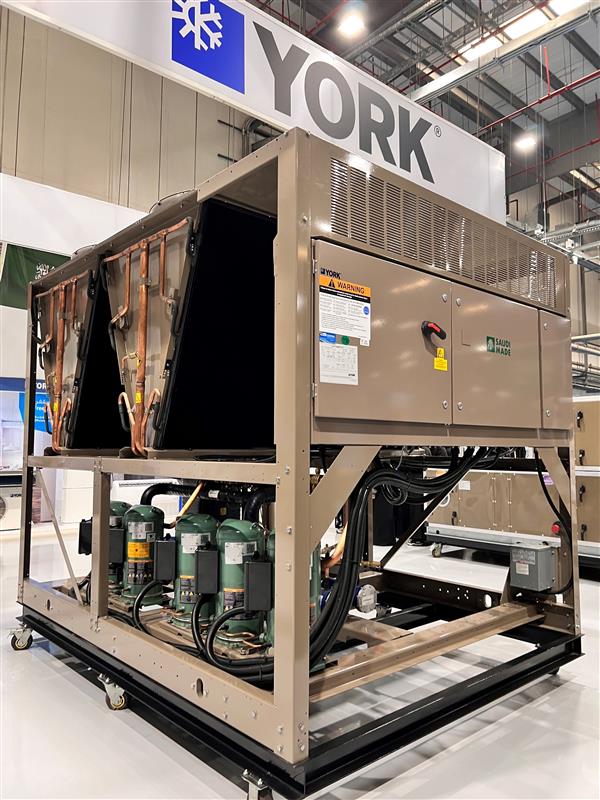
We designed our HVAC solutions to suit all data centers' needs and achieve exceptional results. Our Close Control Air Conditioners (CRAC units), including the P-Series, G-Series, and R-Series, are tailored to meet your specific requirements with different installation options, cooling capacities, and air supply options.
Contact us today to learn more about HVAC systems and other data center solutions.
Contact us to explore our products, get expert guidance, or find the optimal solution for your operations.

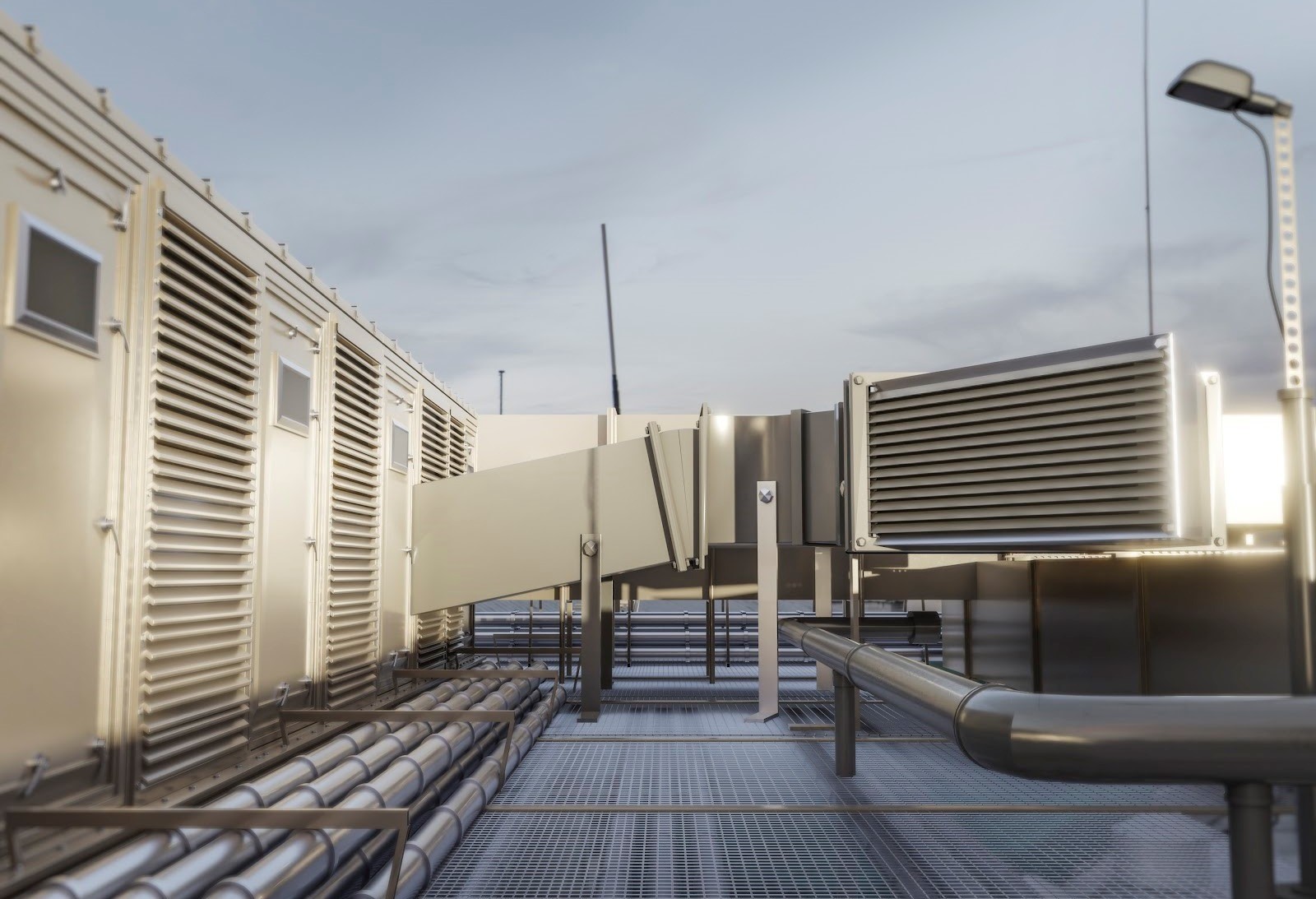
Compare VRF systems and traditional HVAC to find the best solution for your business. Learn about energy efficiency, cost savings, and smart temperature control.

Compare air-cooled and water-cooled chillers to find the best fit for your facility. Learn about how they work, their advantages & limitations.
The integration of the Internet of Things (IoT) with Building Automation Systems (BAS) is transforming how buildings are managed, monitored, and optimized
A well-maintained commercial HVAC system plays a significant role in ensuring occupant comfort, maximizing energy efficiency, and creating a healthy indoor environment.
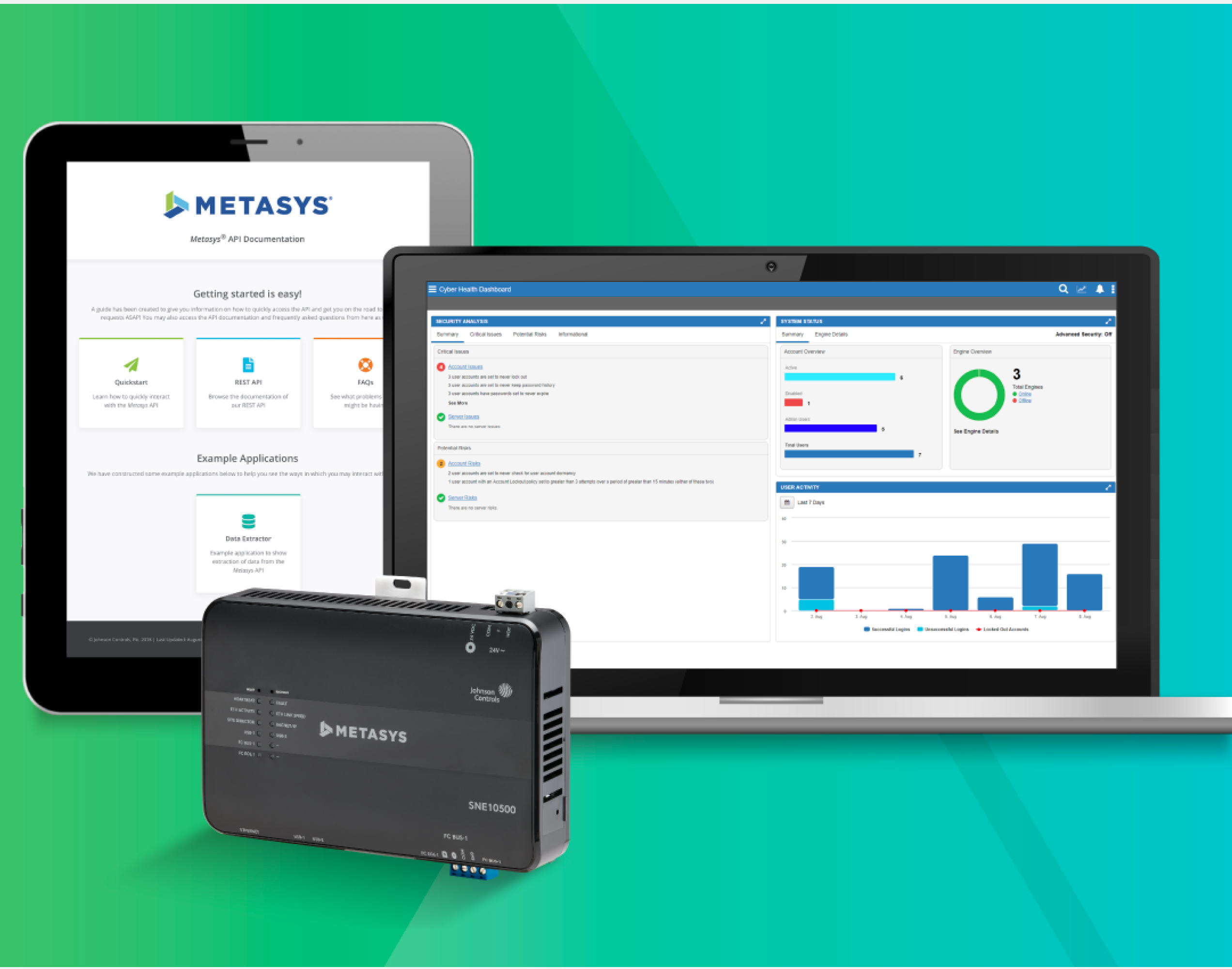
Explore the Metasys Building Automation System by Johnson Controls, a revolutionary solution integrating HVAC, lighting, and security systems into a centralized platform for enhanced energy efficiency, comfort, and operational excellence.
An overview of smart buildings, their technologies, benefits, and how they enhance energy efficiency, sustainability, and occupant comfort.
Discover the essential role of HVAC systems in modern infrastructure, including residential and commercial applications, types of systems, and the difference between HVAC and air conditioning.