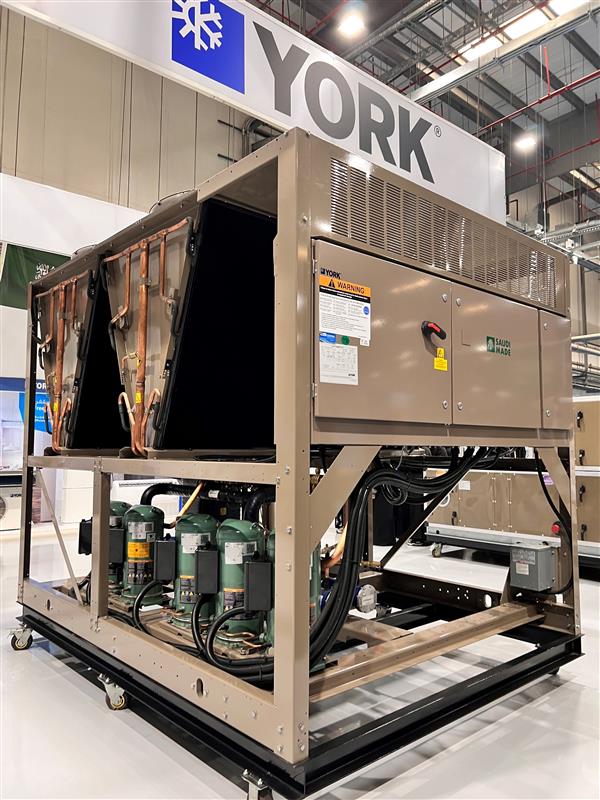
Chillers are the backbone of cooling systems, designed to remove heat from a liquid, typically water or a refrigerant, to provide cooling for industrial, commercial, and residential buildings.
Chillers are an essential part of HVAC systems and are widely used in manufacturing processes, medical facilities, and data centers. They operate on the principle of heat exchange, where heat is absorbed from the environment and released through air or water-cooled systems.
Contents
- How Do Air-Cooled Chillers Work?
- Advantages of Air-Cooled Chillers
- Limitations of Air-Cooled Chillers
- How Do Water-Cooled Chillers Work?
- Advantages of Water-Cooled Chillers
- Limitations of Water-Cooled Chillers
- Facility Size and Cooling Demand
- Climate Conditions
- Chiller Efficiency vs. Installation Cost
- Maintenance of Chillers
What’s the Difference Between Air-Cooled and Water-Cooled Chillers?
Choosing the right chiller for your facility is a critical decision that impacts efficiency, energy consumption, and overall operational costs. Air-cooled and water-cooled chillers are the two most common types, each offering distinct advantages and limitations. Understanding how they work and the factors that affect their performance can help facility managers make an informed decision.
Air-Cooled Chillers
Air-cooled chillers are commonly used in facilities where water availability is limited or where ease of installation is a priority. They are widely found in commercial buildings and small industrial facilities.
How Do Air-Cooled Chillers Work?
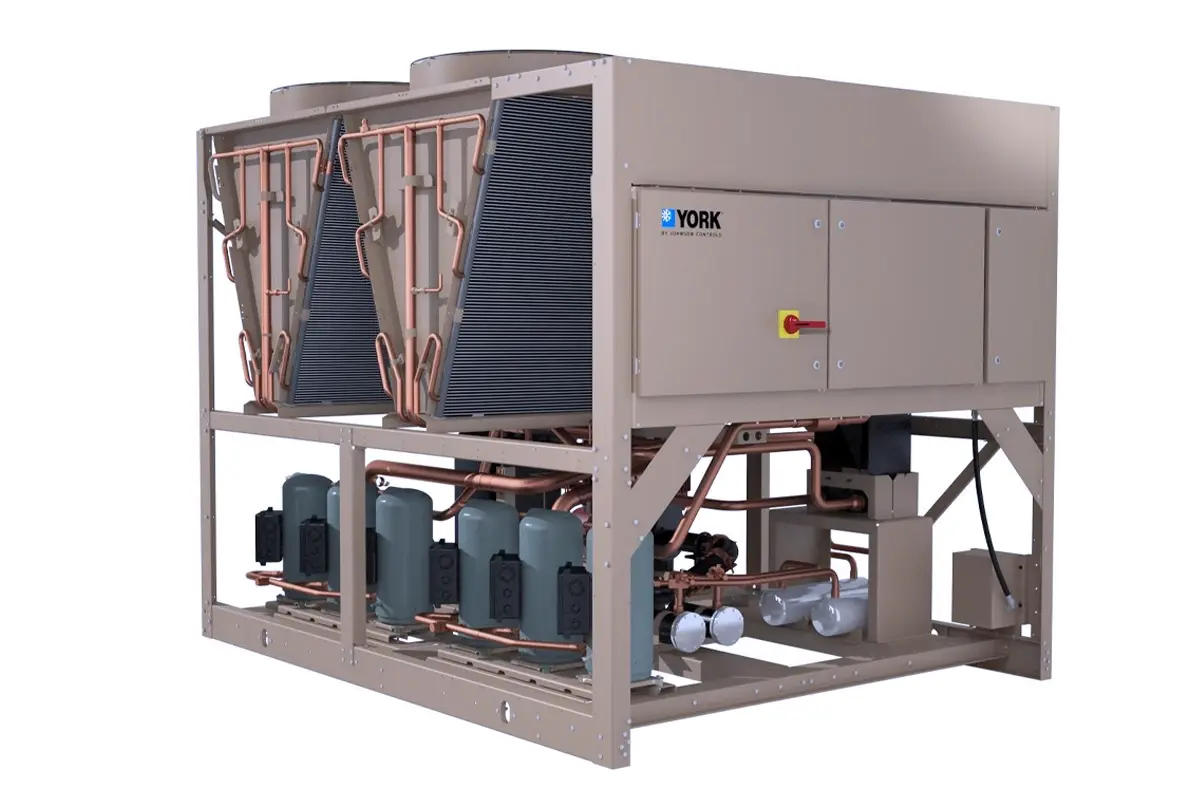
Air-cooled chillers use ambient air to dissipate heat from the refrigerant. The refrigeration cycle in an air-cooled chiller involves the following stages and components:
- Evaporator: Warm return water from the facility flows through the evaporator, where it transfers its heat to the refrigerant. The refrigerant evaporates into a low-pressure gas while the water is cooled for recirculation in the building.
- Compressor: The chiller’s compressor draws in the low-pressure refrigerant vapor and compresses it, raising its pressure and temperature to a hot, high-pressure gas that is pushed into the condenser coil.
- Air-Cooled Condenser (with Fans): The hot refrigerant gas flows through condenser coils while one or more fans blow ambient air over these coils. The air carries away the heat from the refrigerant, causing the refrigerant to cool and condense into a liquid.
- Expansion Valve: The expansion valve reduces the pressure of the refrigerant, which lowers its temperature. This allows the refrigerant to return to the evaporator and absorb heat again, continuing the cooling cycle.
Advantages of Air-Cooled Chillers
- Ease of Installation: These chillers require minimal infrastructure since they do not need a cooling tower or water source, making them ideal for locations with limited water supply.
- Lower Maintenance Requirements: Since air-cooled chillers don't require water systems or cooling towers, they generally have lower maintenance needs.
- More Suitable for Small to Medium Facilities: They are ideal for facilities where cooling needs are moderate, such as small to medium-sized commercial buildings and offices.
- Reduced Risk of Water Damage: Since they operate without water, there is no risk of leaks, scaling, or bacterial growth associated with cooling towers.
Limitations of Air-Cooled Chillers
- Lower Efficiency in Hot Climates: Their efficiency drops in high-temperature environments since they rely on ambient air for cooling.
- Higher Noise Levels: The fans used for heat dissipation generate noise, which may not be ideal for certain applications.
- Higher Energy Consumption: Compared to water-cooled systems, air-cooled chillers tend to consume more electricity to achieve the same cooling effect.
Water-Cooled Chillers
Water-cooled chillers are often preferred for large-scale industrial and commercial facilities where efficiency and long-term operational savings are key concerns. They are particularly useful in facilities with high cooling demands and stable water supply.
How Do Water-Cooled Chillers Work?
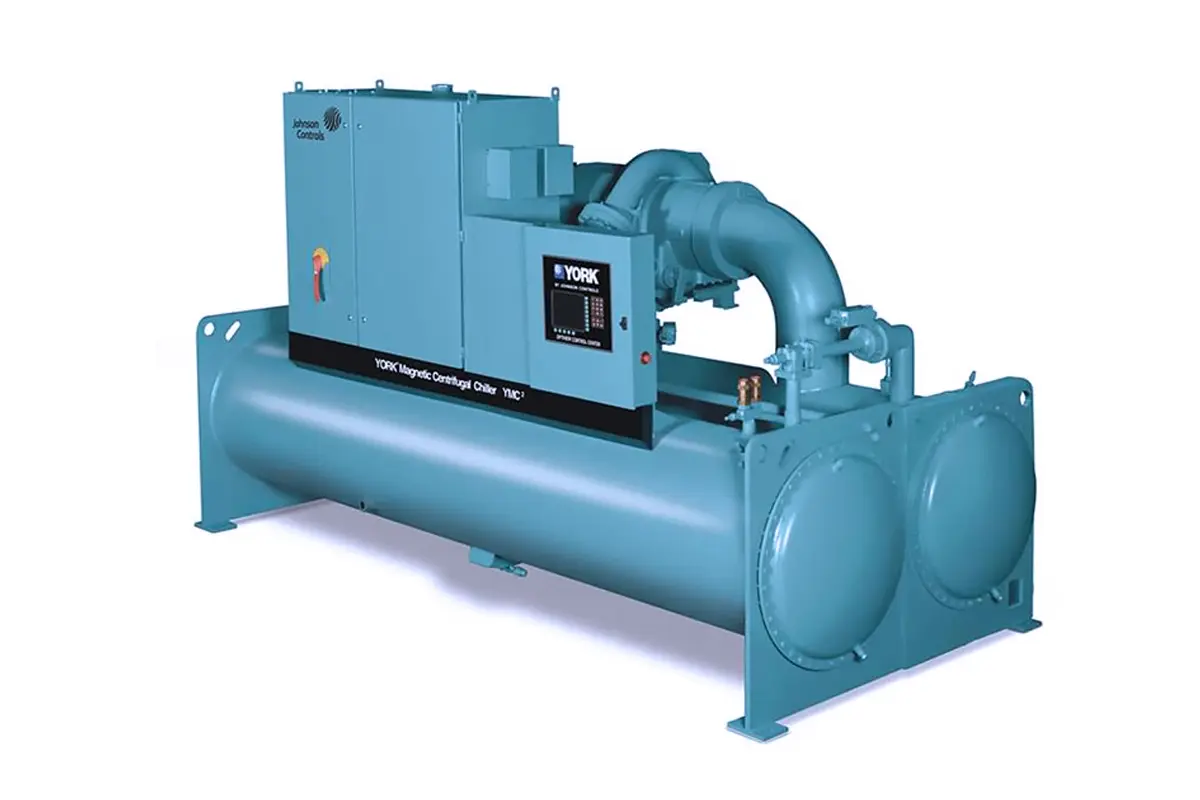
Water-cooled chillers use water instead of air to absorb and carry away the heat from the refrigerant. A typical water-cooled chiller system includes the chiller unit itself and an external cooling tower that expels heat from the water. The chiller’s operation can be outlined in these stages:
- Evaporator: The evaporator’s role is to produce chilled water for the system. It does this by extracting heat from the return water as it passes through the evaporator tubes. On the opposite side, low-pressure refrigerant absorbs this heat and evaporates, maintaining the temperature difference required for continuous heat transfer.
- Compressor: The compressor moves the refrigerant through the system and raises its pressure and temperature after it leaves the evaporator. This ensures the refrigerant can release the absorbed heat in the condenser.
- Water-Cooled Condenser: The condenser removes the heat carried by the refrigerant after compression. It transfers this heat to the condenser water, allowing the refrigerant to condense into a liquid. The heated water is then circulated to the cooling tower, where the heat is rejected, ensuring continuous heat removal from the system and stable chiller operation.
- Cooling Tower: The cooling tower rejects heat from the condenser water before it returns to the chiller. Warm water from the condenser is distributed within the tower and brought into contact with ambient air. As a portion of the water evaporates, heat is removed from the remaining water, reducing its temperature. The cooled water is then recirculated back to the condenser.
Advantages of Water-Cooled Chillers
- Higher Efficiency: These chillers are more energy-efficient, especially in large facilities, because water is a better heat conductor than air.
- Longer Lifespan: Water-cooled chillers last longer than air-cooled models since they are typically installed indoors, shielding them from weather damage. Their efficient operation reduces strain on components, further extending lifespan.
- Quiet Operation: Water-cooled chillers produce less noise since they do not require large fans for heat dissipation.
- Better Performance in Hot Climates: Since water is used for heat exchange, these systems remain effective even in high-temperature environments.
Limitations of Water-Cooled Chillers
- Higher Initial Costs: Installation costs are significantly higher due to the need for cooling towers, pumps, and extensive piping.
- More Complex Maintenance: Regular water treatment is required to prevent scaling, corrosion, and bacterial growth in cooling towers.
- Dependence on Water Supply: These systems require a consistent water source, making them unsuitable for areas with water shortage.
- Additional Infrastructure Required: Cooling towers, water pumps, and piping add to the system's complexity and space requirements.
Key Takeaway: Air-Cooled vs Water-Cooled Chillers
Installation Complexity
Simple setup with minimal infrastructure
Complex setup requiring cooling towers, pumps, and piping
Initial Cost
Lower upfront cost
Higher upfront investment
Energy Efficiency
Lower efficiency, especially in hot climates
Higher efficiency, performs well even in high temperatures
Operating Cost
Higher due to increased energy consumption
Lower over time due to better efficiency
Water Dependency
No water required
Requires consistent water supply
Maintenance
Lower maintenance requirements
More complex, requires regular water treatment
Noise Levels
Higher due to fan operation
Quieter, no fans for heat dissipation
Lifespan
Shorter, exposed to outdoor conditions
Longer, typically installed indoors and protected
Use Cases
Small to medium facilities with moderate cooling needs
Large facilities with high cooling demands and stable water supply
How to Choose the Best Chiller for Your Facility
Both air-cooled and water-cooled chillers serve essential roles in various industries. There is no definite right or wrong choice; selecting the most suitable option depends on evaluating the specific needs of your facility in terms of efficiency, cost, climate, and maintenance.
Facility Size and Cooling Demand
Water-cooled chillers are ideal for large industrial and commercial buildings with high cooling demands, whereas air-cooled chillers suit smaller facilities.
Climate Conditions
If the facility is located in a hot climate, water-cooled chillers perform better. On the other hand, in moderate climates, air-cooled chillers can be a cost-effective choice.
Chiller Efficiency vs. Installation Cost
Air-cooled chillers have lower upfront costs but may result in higher electricity expenses, while water-cooled chillers require higher initial investments but offer long-term energy savings.
Maintenance of Chillers
Facilities with staff experienced in water treatment and system maintenance may benefit from water-cooled chillers. For those with limited technical resources, air-cooled chillers are easier to manage.
Consult an Expert
If you’re still uncertain about which chiller best fits your facility, schedule a free session with one of Johnson Controls Arabia's experts. We’ll help you assess your requirements and identify the most suitable solution.
Request Consultation
Johnson Controls Arabia's Chiller Solutions
At Johnson Controls Arabia, we provide reliable cooling solutions with water-cooled and air-cooled chillers designed to offer efficiency, flexibility, and sustainability. Our units help reduce emissions and lower energy consumption, making operations more cost-effective and environmentally responsible. With a range of versatile chiller designs, we offer greater flexibility to meet the unique demands of various applications, including heating and cooling.
Discover our YORK chiller systems and solutions..