
Air handling units (AHUs) play a critical role in healthcare facilities by supporting infection control, maintaining indoor air quality, and ensuring compliance with strict regulatory standards. Through controlled airflow, advanced filtration, and reliable operation, AHUs help reduce airborne contaminants, manage pressure relationships between spaces, and provide consistent ventilation.
In healthcare environments, air can carry infectious particles, dust, and other contaminants between rooms if airflow is not properly managed. Air handling units play a central role in limiting that risk by controlling how air is supplied, filtered, exhausted, and renewed throughout the building.
AHUs maintain controlled pressure differentials by adjusting the amount of air supplied to a space relative to the amount removed through exhaust. When more air is supplied than exhausted, positive pressure is created, preventing contaminated air from entering sterile spaces. When more air is exhausted than supplied, negative pressure is created, drawing air inward and containing airborne infections within isolation rooms, protecting surrounding zones.
AHUs enable continuous air renewal by maintaining higher air change rates than those found in standard commercial buildings. By supplying filtered fresh air and exhausting stale air, AHUs help maintain a controlled, hygienic indoor environment.
AHUs also control how air is delivered and circulated within a space. Proper airflow distribution ensures that clean, filtered air reaches all occupied areas, not just the points closest to supply vents. Carefully designed supply and return paths prevent dead zones where air remains stagnant, as well as short-circuiting, where fresh air is extracted too quickly without reaching the wider room, ensuring that contaminants are consistently diluted and removed, supporting uniform air quality across patient rooms and treatment areas.
Filtration is a core function of AHUs in healthcare settings, where air must meet stringent requirements. Most healthcare AHUs use a multi-stage filtration approach to progressively remove particles of different sizes.
The process often begins with pre-filters that capture larger particles such as dust and debris, protecting downstream components and extending the life of finer filters. Secondary filters then remove smaller particulates, improving overall air quality before the air reaches critical areas.
High-Efficiency Particulate Air (HEPA) filters are commonly used in sensitive environments such as operating rooms, intensive care units, and cleanrooms. These filters are capable of capturing at least 99.97% of particles as small as 0.3 microns, including bacteria and some viruses. In certain applications, additional filtration technologies such as activated carbon or antimicrobial coatings may be integrated to address odors and microbial growth.
Healthcare facilities must also comply with established standards that define filtration efficiency, air change rates, and system performance. The requirements are typically defined by the type of room, clinical function, and risk profile. This is why healthcare AHUs must be selected and configured with reference to applicable standards and guidelines, rather than general commercial HVAC assumptions.
Healthcare facilities operate continuously, and their HVAC systems must match this level of reliability. AHUs serving hospitals and clinics are designed for uninterrupted operation, often incorporating redundancy and fail-safe features to minimize the risk of system failure.
Redundancy can include backup fans, duplicate critical components, or parallel systems that maintain airflow if one unit requires maintenance or experiences a fault.
In addition to redundancy, AHUs are designed to respond to faults in a controlled way, shifting to safe operating conditions rather than continuing under unstable or unknown settings. For example, controls may limit airflow, shut down specific sections, or maintain minimum ventilation to prevent contamination risks.
Healthcare facilities are subject to strict regulations, many of which are directly tied to air quality and ventilation performance, making properly designed and operated AHUs essential for maintaining compliance.
Modern AHUs are often integrated with building management systems that enable continuous monitoring of key parameters such as airflow rates, pressure differentials, temperature, humidity, and filter status, which allows facility teams to identify deviations quickly and take corrective action before conditions affect patient safety.
At the same time, facilities must maintain accurate records of system performance, maintenance activities, and filter replacements to demonstrate compliance during inspections and audits. Regular validation and testing, including airflow balancing and filter integrity checks, further ensure that AHUs continue to meet required standards over time.
Air handling units in healthcare facilities are essential infrastructure that directly supports patient safety, infection control, and regulatory compliance. Through precise airflow management, high-efficiency filtration, continuous operation, and robust monitoring, AHUs help create controlled indoor environments where healthcare services can be delivered safely and effectively.
At Johnson Controls Arabia, we design air handling solutions to meet the strict requirements of healthcare environments. Our YORK customized air handling units, YMA, support reliable airflow control, high indoor air quality, and flexible configurations for hospitals and other critical facilities. With our engineering expertise and local support, we help healthcare providers maintain safe, compliant, and consistently controlled indoor environments.
Contact us today to learn more about our air handling units for healthcare facilities.
Contact us to explore our products, get expert guidance, or find the optimal solution for your operations.

Compare VRF systems and traditional HVAC to find the best solution for your business. Learn about energy efficiency, cost savings, and smart temperature control.

Compare air-cooled and water-cooled chillers to find the best fit for your facility. Learn about how they work, their advantages & limitations.

The integration of the Internet of Things (IoT) with Building Automation Systems (BAS) is transforming how buildings are managed, monitored, and optimized
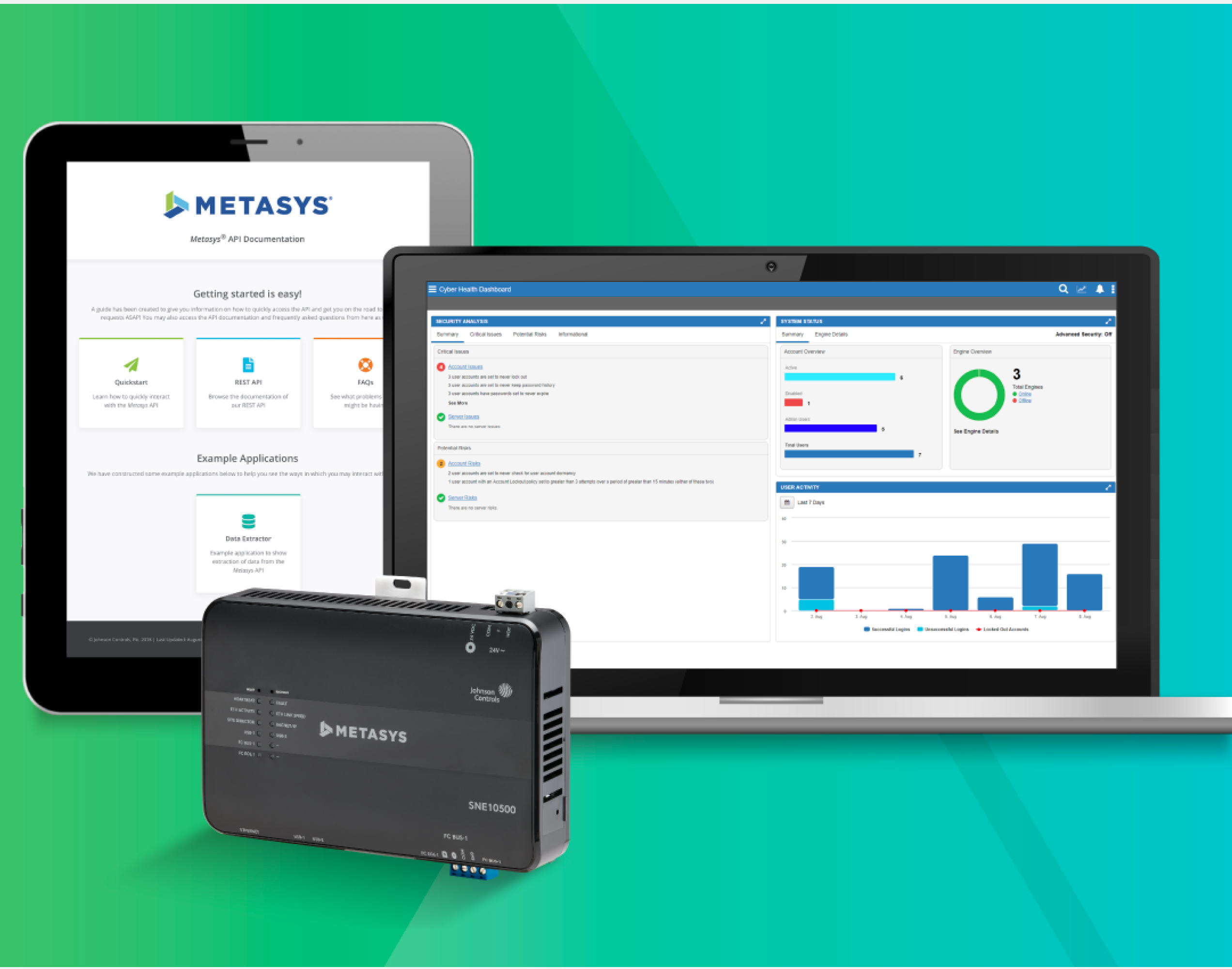
Explore the Metasys Building Automation System by Johnson Controls, a revolutionary solution integrating HVAC, lighting, and security systems into a centralized platform for enhanced energy efficiency, comfort, and operational excellence.

An overview of smart buildings, their technologies, benefits, and how they enhance energy efficiency, sustainability, and occupant comfort.